Posts

Showing posts with the label Geography

Geography Fieldwork

Image
 Today, year three visited Mornington Woods to recap some of their learning in Geography and Science. First, they went on a scavenger hunt to identify different plants and trees. Then, they looked at the four layers in the woods to compare them to the rainforest to see which plants and animals live there.in addition, they sat and sketched a scene of the woods. Finally, they use pd light metres to measure the light in different parts of the woods. It was then time for lunch and an ice cream, a good day. 
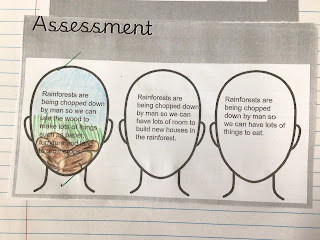
How are humans threatening the rainforest?

Image
 During their lesson, the children watched a clip about the rainforest to identify five different ways humans are damaging the rainforest. First, they identified that deforestation means cutting down the trees, this can be done for many reasons. They then debated why man would cut down trees. Some amazing ideas were discussed but they finally agreed on five: mining, growing crops, feeding cattle, chopping down trees for wood as well as making paper.   

Why is a rainforest important to us?

Image
 This week the children looked at why the rainforest is important to us. Some of the children knew that we get oxygen from the trees but the didn’t know that they also take away the carbon dioxide. The rainforest also provides, medicines for us, settlements for indigenous people, lots of animals and insects as well as some of our food. Well done year 3, a fabulous lesson and discussions. 

Layers of the rainforest

Image
 This week, the children have been learning about the 4 layers of the rainforest: Emergent Layer, Canopy, Understory and the Forest Floor. The children acted out how the canopy acts as an umbrella and blocks out the sun to the other layers. The then identified which layers different animals will live in or if they  could live in different layers. 

Tropical Rainforests

Image
 During the first lesson, the children were introduced to their new journey.  Then, they looked at different types of biomes. These are large areas that have the correct climate/weather for plants and animals to live. They then looked at different pictures of: rainforests, deciduous forests, deserts, oceans and grasslands to help them understand. Following on, the children watched a film about the rainforests and where they are mainly located. This allowed the children to be introduced to The Tropic of Cancer as well as The Tropic of Capricorn and the tropics.  Great first lesson year three. 

Assessment

Image
 This week, the children carried out their assessment about volcanoes. Are all volcanoes bad for the Earth? There were some great discussions within the class.  To conclude their leaning, one of the children made a volcano and we used both coke and mentos as well as bicarbonate and vinegar to make it erupt.  What an explosive time. 

Fieldwork

Image
This week, year three have enjoyed going outside to complete their fieldwork. They visited four different areas of the school and debated the risk in that area for lava flow, ash cloud, earthquakes, landslides and more. Using their knowledge from their lessons they were able to discuss and justify their answers. Fabulous lesson year three. 

Why do people choose to live near volcanoes?

Image
 Are people crazy to live near a volcano? Today, the children identified both positive and negative reasons to live near a volcano.  There are many islands in the world that are volcanic islands, where people choose to go on holiday.  Some countries, use the heat from the magma and steam to provide their houses with natural heating and hot water. Furthermore, they mine for minerals, gold, lead and sulphur from the magma,  However, there are some negatives to living near a volcano as when they erupt they can destroy both houses and landscapes as well as mud slides. The ash and volcanic eruptions also stop travel around the world.